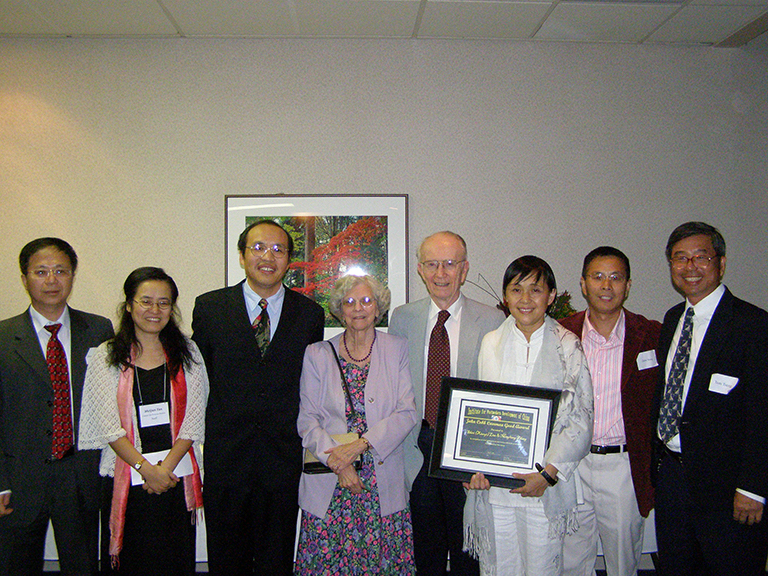
John Cobb Common Good Award

The John Cobb Common Good Award is the world’s most prestigious prize for ecological civilization. The award is named after John B. Cobb, Jr., one of today’s most important ecological thinkers, the author of more than 50 books, and a member of the highly respected American Academy of Arts and Science. Ecological themes have been pervasive in Cobb’s work since 1969, when he turned his attention to the ecological crisis. He became convinced that environmental issues constituted humanity’s most pressing problem.

In 1972, he published the first single-author book in environmental ethics, Is It Too Late? A Theology of Ecology. In the same year he organized the first conference on the ecological crisis titled “Alternatives to Catastrophe.” He is the co-author, with Herman Dale, of For the Common Good: Redirecting the Economy Toward Community, the Environment, and a Sustainable Future (1989). In 2015, he donated all his personal savings to host the expansive, international conference,“Seizing an Alternative: Toward an Ecological Civilization.” More than one thousand presenters from more than 30 countries and 80 fields of specialty participated in this event.

For Dr. Cobb, developing ecological civilizations, in which people live with respect and care for the community of life, taking care of one another and the earth,is the best hope of the world. The John Cobb Common Good award is given to those who promote this hope in effective and remarkable ways.

Award Honorees

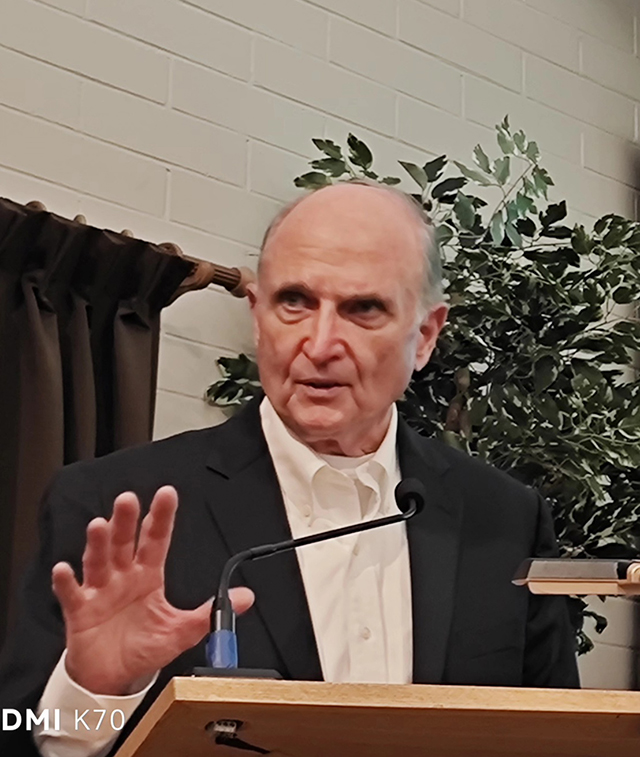
David Orr is a visionary educator and ecological thinker, he introduced the influential concept of “ecoliteracy”, reshaping how we understand the relationship between education, community, and the planet. His life’s work has deeply influenced the way we design, build, and teach—emphasizing place-based learning, community resilience, and planetary health. Through his transformative vision, David Orr continues to inspire generations to work toward a more just, sustainable, and hopeful future. His legacy stands as a guiding light for ecological and educational renewal.

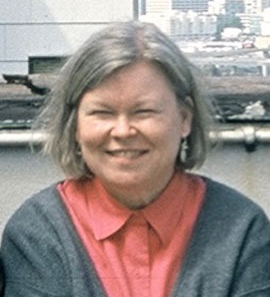
Jean Giblette, is a trailblazer in ecological agriculture and classical Chinese medicine in North America. Born and raised in rural Minnesota, she began in agronomic research before being recruited to Radcliffe College through Harvard’s Farm Program. After a career in healthcare research and administration, she co-founded an ecological farm in upstate New York and became a leader in the movement to grow and promote Chinese medicinal herbs sustainably. Jean built multi-state grower networks and led national efforts to educate acupuncture students on the ecological and agricultural foundations of Chinese herbal medicine. Through her ongoing work with the High Falls Foundation, she continues to integrate organic farming, health, and education—advancing a holistic vision where human and environmental well-being are deeply interconnected.

Wenliang Li, is recognized for his transformative leadership in sustainable business and ecological civilization. His visionary integration of traditional Chinese values into corporate governance has set a new benchmark for environmental stewardship and corporate responsibility, inspiring a more ethical and holistic approach to business in the modern era.

Xiuyu Zhang, is a distinguished leader in the advancement of ecological civilization in China. He has directed over 200 national and local research projects, including the formulation of major initiatives such as the Biodiversity Conservation and Ecological Civilization Construction Plan. Deeply committed to public engagement, Zhang has led more than 100 environmental education events and is the author of influential works, including Building Ecological Civilization in the New Era: China’s Path and Practice. His work bridges policy, research, and education, making a lasting impact on China’s sustainable development and environmental governance.

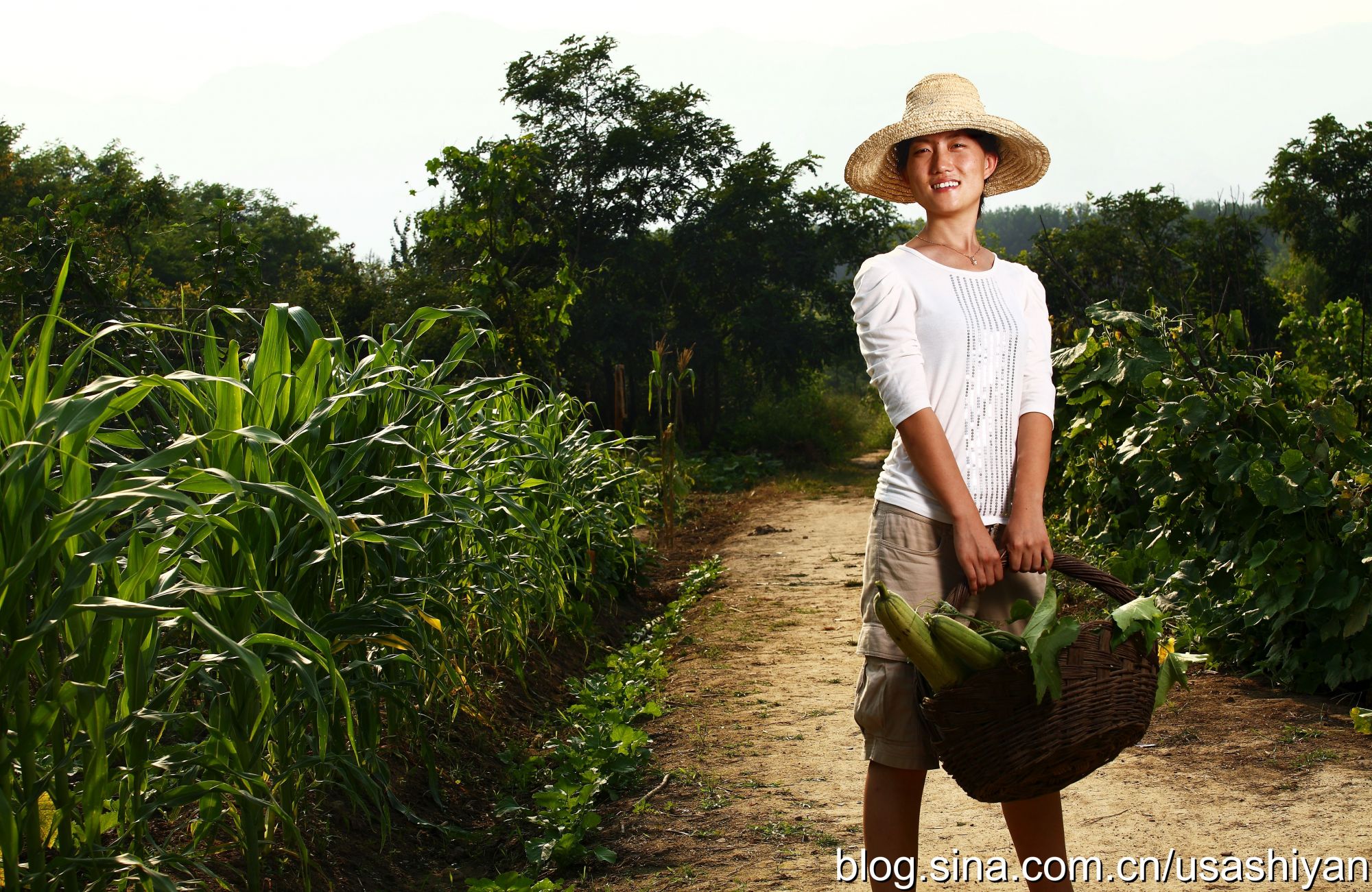
Yan Shi, is the pioneering force behind China’s organic Community-Supported Agriculture (CSA) movement. She founded the country’s first CSA Farm while pursuing her PhD at Renmin University. Since then, thousands of similar farms have emerged across China. She has garnered global recognition for her work including being named one of the 20 most interesting people in Beijing in 2013, a Young Global Leader recognized by the World Economic Forum in 2016, and winning the women’s social entrepreneur of the year award in 2018. Now Dr.Shi is co-president of the International CSA Network (URGENCI)Dr. Yan Shi’s dedication to ecological farming has revitalized the perception of farmers, agriculture, and rural areas, transforming them into sources of pride, respected vocations, and centers of aspiration and innovation. Her influential work continues to inspire and reconnect people with the land.

Vandava Shiva, a blocker of Western-style industrialized agriculture, a critic of modern Western-style development concepts and Western-style globalization, a guardian of biodiversity and cultural diversity, a defender of the dignity of life, and a leading figure of ecofeminism in the third world, Dr. Siva had personally participated in the far-reaching famous “Tree Hugging Movement” in India, founded India’s “Nine Seeds Foundation”, launched a seed bank, encouraged organic farming, trained farmers, and established a fair trade platform network. So far, 111 have been established in 22 provinces of India. A seed bank. In 1993, he won the “Right Lifestyle Award”, known as the “alternative Nobel Peace Prize”. In 2003, he was named an “Environmental Hero” by Time Magazine. She won the 2022 John Cobb Common Award because of her decades of work in defending the dignity of life, fighting for the rights of women, the poor and farmers, protecting biodiversity, and caring for the earth. unremitting efforts and great achievements in health and the pursuit of ecological civilization.

Kongjian Yu, a renowned Chinese ecological urbanest, urban planner and one of the world’s leading landscape architects, is the founder and Dean of the Graduate School of Landscape architecture at Peking University. He is also a member of American Academy of Arts and Sciences.

Prof. Yu received his Dr. Degree in Design Degree from Harvard Graduate School of Design.When he designs ecological landscape,he always keeps community in his mind.The Red Ribbon he designed is an good example. The ribbon actually is a man made bench which stretches for 500 meters along the riverbank, integrating a boardwalk, lighting, seating, environmental interpretation, and environmental orientation. Various plant specimens are grown in strategically placed holes in the ribbon. Local people can enjoy life and interact there. Yu’s ecological approach to urbanism has been implemented in more than 2,000 projects in more than 200 cities in China and abroad.

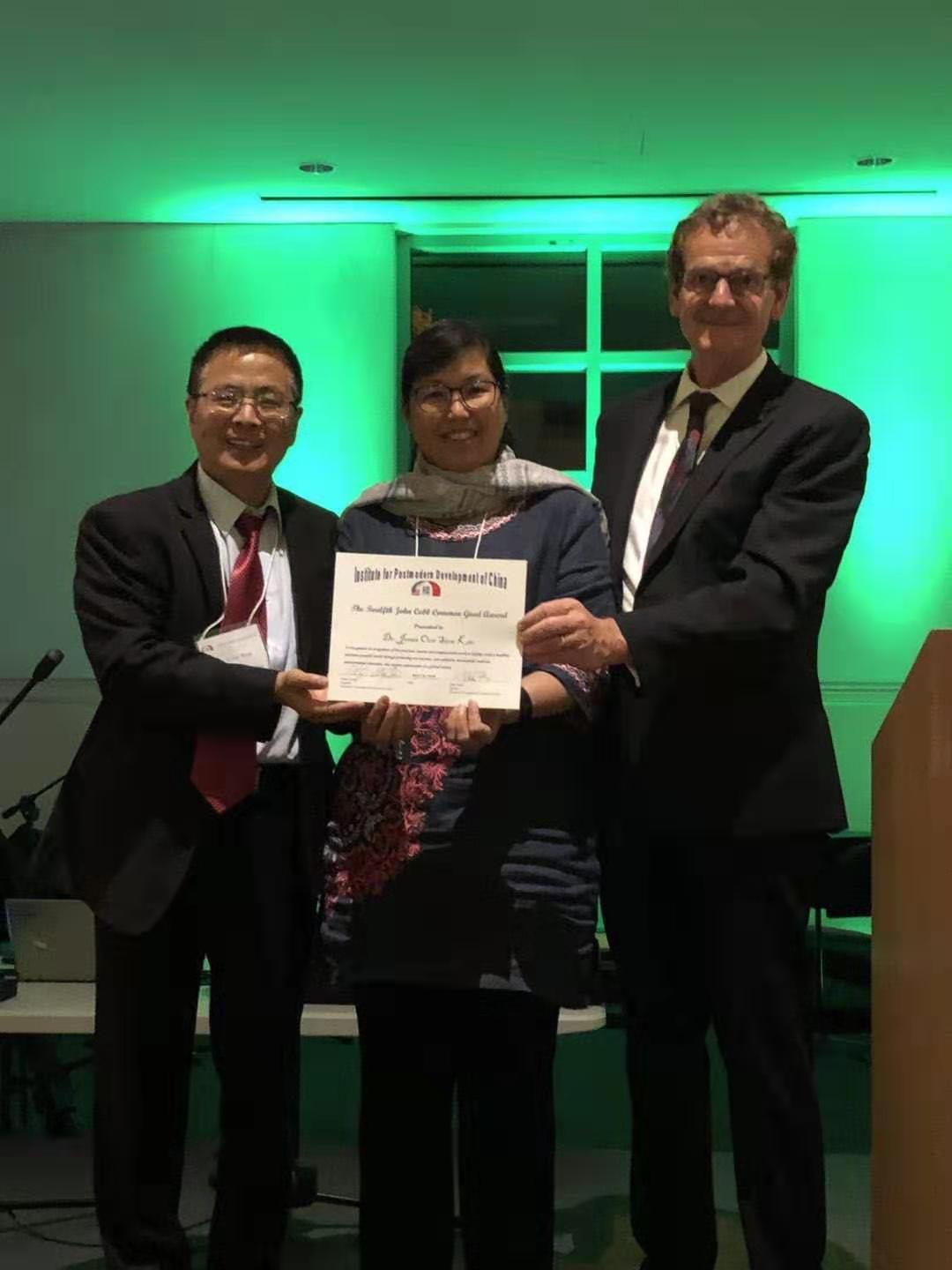
Joean Oon Siew Kee (2019), is a Malaysian homeopathy and naturopathy therapist, Health and Environmental Education Advocate, and Global Promoter of Eco Enzymes. In the past 12 years, Dr Joean Oon and her team have journeyed to Malaysia, China, Singapore, Africa, Australia, Indonesia, and the United States, promoting the use of eco-enzymes. Hundreds of villages have started to undertake the zero waste movement through eco-enzymes project. Through promoting eco-enzymes, they not only awaken many people’s ecological consciousness and health consciousness, but also help build many local ecological communities that are creative, compassionate, good for the earth, good for people, which are the local building blocks of Ecological Civilizations. She models practical, creative and compassionate work in helping create a healthier and more peaceful world through enzyme research, homeopathic medicine, and environmental education.

Shuyuan Lu, is Professor and Director of the Center for Ecological Culture Studies, and Director of the Center for Constructive Postmodern and Ecological Culture Studies at Huanghe University of Science and Technology in Henan, China. He is noted as one of China’s foremost eco-critics, fostering work at the intersection of literature, art, and ecology. He is convinced that “the ecological issue threatening the life on Earth, both human and ecological cannot be solved without taking human spirituality into account.” Professor Lu is the author of more than 20 books and hundreds of articles. His recent book is The Ecological Era and Classical Chinese Naturalism (Springer Verlag,2017).

Sharon Snowiss, is Professor of Political Studies at Pitzer College and Claremont Graduate University. She is known at Pitzer as a gifted teacher, and through her work with the Institute for the Postmodern Development of China she is known across China as a friend and mentor of Ecological Civilizations and East-West dialogue. Her many areas of expertise – traditional Taoist philosophy, alternative medicine, comparative political theory, feminist theory, traditional Chinese medicine, and Qi Gong– all focus on the common good. Dr. Snowiss treats each of these fields as part of a single whole that is conducive to what she calls “cross-cultural healing.” She believes that a whole world needs whole people. Whether championing women’s leadership or being one of the first teachers of Qi Gong classes to undergraduates in the United Statesshe is a living witness to the possibility of harmony and what Whitehead calls world loyalty.

Jinlei An, called “The Number One Farmer in China,” is a renowned Chinese organic farmer. After quitting his job at a state-owned enterprise, he returned to his village, Dongzilong Village, Zaoqiang County of Hebei Province, to do organic farming. Having pursued this work for more than 20 years, his farm is regarded as “one man’s Utopia.” He is Director of the Center for Constructive Postmodern Agriculture, and is called a “pastoral philosopher” whose traditional organic farming and lifestyle embodies the wisdom of oneness of nature and humankind. He regards the land as “a living friend.”

For him, “all plants have life; they long for love, friendship, and harmony.” For this reason, he does not use chemical fertilizers, pesticides, machinery, or plastic membraneson his farm. Fearing that the radiation from his cell phone could harm the seedlings and insects,he does not use carry a cell phone in the field. Every year he plants a large area of millet to entertain sparrows. In return, the sparrows help him to catch potentially harmful insects. Qi Shengyong, a reporter of Yanzhao Metropolitan Daily, stated “As a reporter, I asked myself who touches my heart most and makes me admire him most . . . when the name Jinlei An, a Zaoqiang peasant appeared in my mind, even I was a little surprised.” In 2012, Mr. An was voted“China’s Most Moving Figure.”

Herman Daly, a renowned American ecological economist, was Senior Economist in the Environment Department of the World Bank,where he helped to develop policy guidelines related to sustainable development. In 1996, he was awarded the Right Livelihood Award for “defining a path of ecological economics that integrates the key elements of ethics, quality of life, environment and community.”In 2014, he was the recipient of the Blue Planet Prize of the Asahi Glass Foundation. Dr. Daly is also a co-nominee for Nobel Peace Prize due to his revelation that the current economic system is leading to ecological collapse and his great contribution to ecological economics.

Dr. Daly is the author of a number of books, including For the Common Good: Redirecting the Economy toward Community, the Environment, and a Sustainable Future(with John Cobb).This bookdemonstrates how conventional economics and a growth-oriented industrial economy have led us to the brink of environmental disaster, and shows the possibility of a different future. It was named as one of the Top 50 Sustainability Books by University of Cambridge Programme for Sustainability Leadership and Greenleaf Publishing.

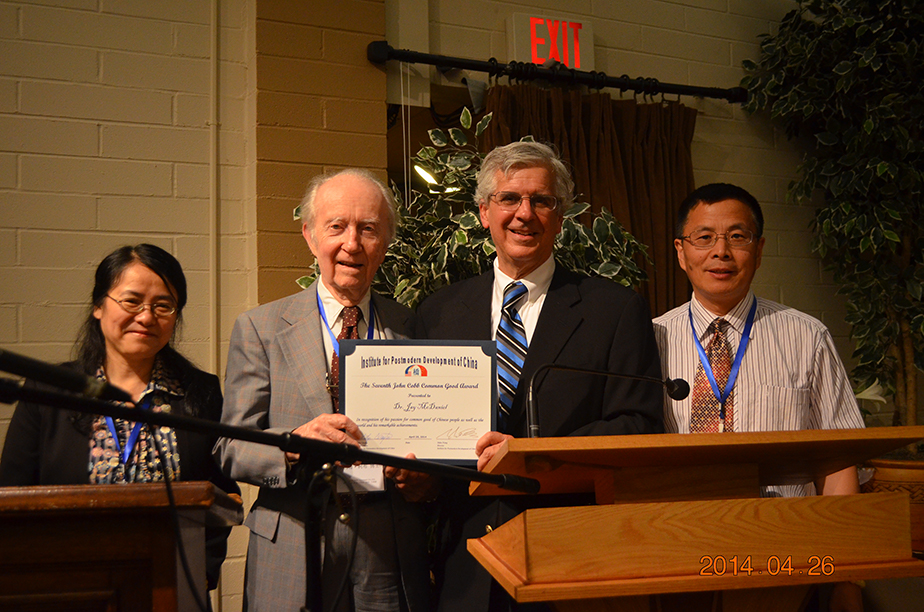
Jay McDaniel (2014) is an American philosopher and theologian, professor at Hendrix College, and director of Ecological Civilization International. He has been an advocate for nature, the wild, and inter-religious dialogue and a resister of consumerism, economism, and anthropocentrism.Dr. McDaniel is an active voice for ecological civilization in social media. He hosts and writes for the website “Open Horizons” [www.openhorizons.org], whose aim is “to offer ideas that might help people create multi-cultural, interfaith communities that are creative, compassionate, participatory, ecologically wise, and spiritually enjoyable.” His publications include: Living from the Center (St. Louis: Chalice Press, 2000), Gandhi’s Hope: Learning from Other Religions as a Path to Peace ( Maryknoll: Orbis Books, 2005), Earth, Sky, Gods and Mortals: Developing an Ecological Spirituality (Wipf and Stock Publishers, 2009).

Tiejun Wen (2013), a professor at the Institute of Advanced Studies for Sustainability at the Renmin University of China, is a renowned agricultural economist in China. He has been leading the New Rural Reconstruction Movement in China. The aim of this movement is “to promote innovation and evolution for rebuilding a positive social and economic structure for rural sustainability.” The participants of the movement include villagers, city citizens, intellectuals and a great many volunteers.

The philosophy of the movement is captured in the three Ps (or three People’s Principles): “people’s livelihood, people’s solidarity, and people’s cultural diversity.” As a very influential NGO movement, the New Rural Reconstruction Movement “has helped advance ecological civilization as a people’s endeavor to promote village cooperatives, organic farming, and eco-architecture.” Professor Wen is the author of an influential best-selling work on the agrarian crisis in China.

Zongchao Liu, president of Beijing Academy of Ecological Civilization and a member of UN International Academy of Ecological Safety, is a noted Chinese Eco-agronomist, founder of Ecological agrology in China. He and his colleagues have developed and produced organic co-fertilizer for 20 years. Experiments conducted by Beijing’s Soil and Fertilizer Workstation on wheat, rice and vegetables in 1999-2000 showed that Eco-organic fertilizers significantly increased crop output; the wheat yield rose 10.4%-14.69%; paddy rice yield grew 6.3%; bean yield increased 12.95%; and celery yield, 7.24%-19.01%. Not only did yield increase significantly, but the quality of the products also dramatically improved, with the nitrate content of nearby water decreasing by 17.0%. Dr. Liu and his colleagues have helped many Chinese villages produce their own organic Eco-fertilize.He is the author of An Outlook on Ecological Civilization (2010).

Mark Anielski (2011), is a leading figure in the economics of happiness, who has devoted himself to measuring the well-being and happiness of nations, communities and businesses. Heis the author of the best-selling, award-winning book The Economics of Happiness: Building Genuine Wealth (2007) and the recent book An Economy of Well-being: Common Sense Tools for Building Genuine Wealth and Happiness (2018). The Economics of Happiness was published in China in 2011. In 2008, his book won the gold medal in the Conscious Business and Leadership category at the Los Angeles Nautilus Book Awards.

Mr. Anielski has served as an economic strategist and advisor to governments, business, non-profits, and financial institutions in Canada (Alberta, British Columbia, Ontario, Nova Scotia), the US, Europe (The Netherlands, Austria), China, Bhutan and French Polynesia. For 25 years he has dedicated his time in service to building a new economy based on well-being.

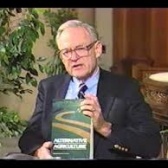
Dean Freudenberger (2010), is a leading figure in postmodern agriculture, organic agriculture and regenerative agriculture. He has been dedicated to promoting organic farming in Africa, Asia, and Latin America, and the US. He is the author of many publications including Global Dust Bowl: Can We Stop the Destruction before It’s Too Late (1990), Food for Tomorrow? (1984), and is a contributor to Rural Ministry: The Shape of the Renewal to Come(1997). From 2012 to the present, he has contributed to the work of the Institute for Postmodern Development in China. His paper, “Ecological Civilization and a Post-modern Agriculture,” co-authored with his son, David, has been widely circulated across China.

Mary Evelyn Tucker (2008), a senior lecturer and research scholar at Yale University, is the co-founder and co-director of the Forum on Religion and Ecology at both Harvard University and Yale University. Her concern for the growing environmental crisis, especially in Asia, led her to organize, with John Grim, a series of ten conferences on World Religions and Ecology at Harvard and Yale.

She co-edited Buddhism and Ecology (Harvard, 1997), Confucianism and Ecology (Harvard, 1998), and Hinduism and Ecology (Harvard, 2000),Worldviews and Ecology (Orbis, 1994), and Religion and Ecology: Can the Climate Change? (2001). Dr.Tucker also wrote Worldly Wonder:Religions Enter Their Ecological Phase (Open Court Press, 2003), and edited theRoutledge Handbook on Religion and Ecology (Routledge, 2016).

Sheri Liao was awarded the Clinton Global Citizen Award in 2008 and named a “Hero of the Environment” by TIME magazine in 2009. Ms. Liao is the founder and president of the non-government organization Global Village of Beijing, a grassroots environmental organization. She is regarded as one of China’s best-known environmental activists and journalists. She served as an environmental adviser on the Beijing Organizing Committee for the 2008 Olympic Games. She and her colleagues atthe Global Village of Beijing have produced models for green neighborhood complexes, rural communities, and organized many public awareness campaigns regarding pollution, recycling, and reducing consumption.Since the Szechuan earthquake, she has devoted herself to creating ecological villages in the devastated areas. She is working passionately against China’s move to depopulate the countryside and produce its food by industrial methods.